


This tree is commonly found in coastal areas, such as southern California. Although related to the oak, this tree is specified as a tanoak, as it is not a true oak. The tops of these tree’s acorns are fuzzy, spiked growths that look similar to a small flower placed atop an acorn. This is in direct contrast to most true oak acorns, which have a hard, brittle stem and cap that can be popped off with force. These acorns are the best identifying feature of this plant.
Foliage
These leaves are toothy, long, and green for the warm months before dropping in the fall
Seeds or Cones
Acorns off the Tanbark Oak take 18 months to reach maturity, forming a hardy, woody shell, more brittle than a conventional oak acorn.

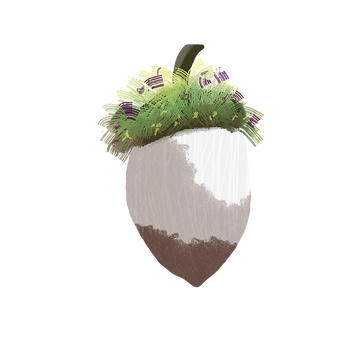
All illustrations by A.S. Longman
Did you know?
This oak easily succumbs to external damage, which opens wounds for fungal growth. This is similar to a person getting a cut and having it become infected.

Download your own QR code here! On a phone, tap and hold to save. On a computer, right click. See the "make a sign" page for detailed instructions on how to make your own sign, and access additional tools!